

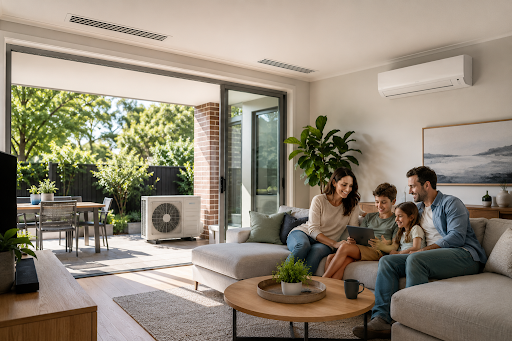
Buying a heating or air conditioning system is one of the more significant home investments you will make, and the range of options available in Melbourne today makes the decision feel more complicated than it needs to be.
Get it right, however, and you have a system that keeps your home comfortable through every season, costs less to run and lasts for fifteen years or more with proper maintenance.
This four-step guide covers everything you need to know before you buy.
Mode Heating & Cooling has been installing heating and air conditioning systems across Melbourne for over 20 years. Our licensed team provides no-obligation consultations, system sizing assessments and professional installation across all major brands and system types.
Step 1: What Size System Do You Need?
Sizing is the most important and most commonly misunderstood step in the entire buying process. When considering how to choose a heating and cooling system for your Melbourne property, capacity must be the first decision, not the last.
A system that is too large will cycle on and off constantly, wasting energy and wearing out components ahead of schedule. A system that is too small will run continuously without ever reaching a comfortable temperature, particularly during Melbourne’s peak summer and winter periods.
Capacity is measured in kilowatts. As a practical guide, bedrooms typically require around 130 watts per square metre, while living areas and open-plan spaces require approximately 140 watts per square metre or more. Use the reference table below to estimate the right capacity for each room:
Room Sizing Quick Reference
| Room Type | Typical Size | Watts per m² | Recommended Capacity |
| Bedroom | Up to 15 m² | 130 W/m² | 2.0 to 2.5 kW |
| Medium Bedroom | 15 to 25 m² | 130 W/m² | 2.5 to 3.5 kW |
| Small Living Room | 25 to 35 m² | 140 W/m² | 3.5 to 5.0 kW |
| Large Living Room | 35 to 50 m² | 140 W/m² | 5.0 to 7.0 kW |
| Open-Plan Area | 50 m² & above | 140 to 160 W/m² | 7.0 kW & above |
These figures are starting points. Ceiling height, insulation quality, the number of windows and which direction they face all influence the final requirement. A west-facing glass living room in a poorly insulated home may need considerably more capacity than the table suggests. A site assessment from a qualified installer confirms the right number for your specific property.
As an example from the original guide: a living room measuring 30 square metres requires a unit of approximately 4.2 kW to climatise it effectively, calculated at 140 watts per square metre.
Avoid the Sizing Trap & Get a Free Assessment
Don’t guess your capacity. Let Mode Heating & Cooling assess your home and recommend the perfect system size for your space.
Step 2: Which Type of System Suits Your Property?
With sizing settled, the next step is understanding the types of heating and cooling systems available for Melbourne homes and businesses. Each works differently, suits different property types and carries distinct running costs. Here is a clear explanation of every option.
- Split System Air Conditioners: These incredibly popular units are split into an indoor wall-mounted unit and an outdoor compressor. They are excellent for types of heating and cooling systems explained in smaller homes because they are relatively low-cost to install and offer highly targeted individual room flexibility.
- Ducted Heating: A central heating unit – typically installed in your roof space, outside, or beneath the floor – pushes warm air through a series of internal floor or ceiling vents. This provides flawless, consistent warmth to every single room.
- Evaporative Cooling: This eco-friendly setup draws fresh, hot outdoor air through moistened filter pads positioned on your roof. As the water naturally evaporates, it delivers a refreshing, clean breeze throughout the house.
- Ducted Inverter Reverse Cycle (Refrigerated Cooling): A premium refrigerated cooling system provides both intensive heating and cooling ducted through a single central unit. The profound benefit of these modern inverter systems is their usefulness during the freezing winter months and their massive energy savings.
- Add-On Cooling: If you already have a compatible gas ducted heater installed, you can frequently upgrade your network with add-on cooling. This highly integrated cooling system utilises the exact same ductwork, grilles and controller as your existing heater, making installation streamlined and operation effortless.
Step 3: Understanding Energy Star Ratings
Every Australian heating and cooling system carries an Energy Star rating, where more stars indicate lower running costs, reduced energy usage, and fewer emissions. For dual-function units, separate star ratings are provided for both the heating and cooling modes.
When comparing star ratings, keep these points in mind:
- A higher star rating reduces quarterly running costs, which compounds into a meaningful saving over a ten-to fifteen-year system lifespan.
- Inverter-based systems consistently achieve higher energy ratings because they regulate output continuously rather than cycling on and off at full power.
- For ducted systems, the star rating applies to the central unit, but the efficiency of the whole system also depends on the quality of the ductwork installation and insulation.
- Systems eligible under the Victorian Energy Upgrades (VEU) program often qualify for government rebates, which can reduce the effective upfront cost significantly.
Step 4: Always Use a Licensed Professional Installer
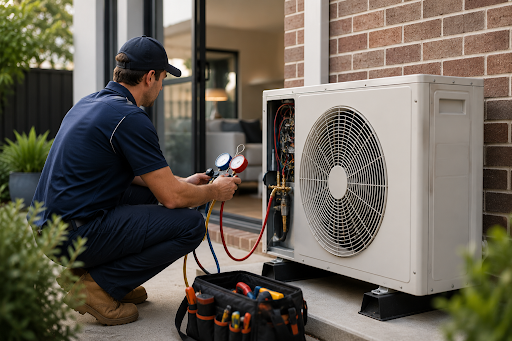
Installing a heating or air conditioning system in Australia is a complex, legally regulated process that requires a licensed HVAC professional. Homeowners should never attempt a DIY installation or hire unlicensed tradespeople.
Beyond legal compliance, manufacturer warranties are strictly conditional on professional installation. Using an unlicensed installer will completely void your warranty, leaving you financially responsible for all future repair costs.
A licensed installer provides:
- Correct sizing confirmation based on a property assessment before any system is specified
- Compliant installation to Australian standards, with all refrigerant handling conducted by ARCtick-certified technicians
- Manufacturer warranty registration completed correctly from day one
- Commissioning and handover, so you know exactly how to operate your new system for maximum efficiency
- Ongoing servicing and maintenance to protect the system’s performance and lifespan long after installation is complete
Mode Heating & Cooling’s team holds all relevant licences and certifications. We install across all system types listed in this guide and carry leading brands including Brivis, Braemar, Bonaire, Lennox, Fujitsu, Midea and Nobo.
Talk to Mode Heating & Cooling Today
For expert guidance on choosing a heating and cooling system in Melbourne, call Mode Heating & Cooling on 03 9308 9965 for a no-obligation consultation today.
What Our Customers Say
75+ verified reviews from Melbourne homeowners who've had Mode install, service, or repair their heating and cooling systems.


